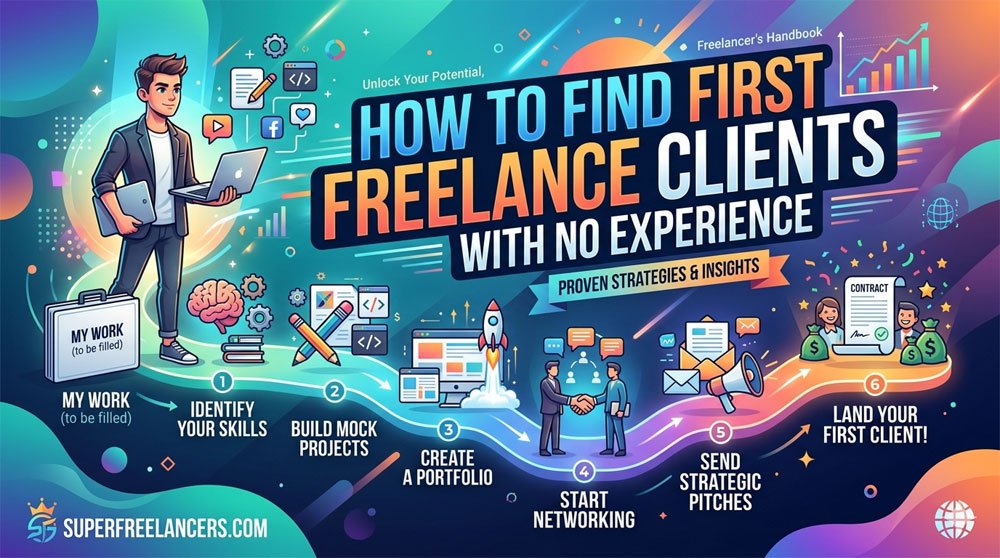
Starting a freelance career feels impossible when every client asks for a portfolio you do not have yet. But here is the truth: every successful freelancer started from zero. This guide breaks down exactly how to land your first paying clients, even without a resume, a portfolio, or a single referral.
The gap between "I want to freelance" and "I have a paying client" is smaller than you think. You just need the right strategy. According to Upwork's Freelance Forward report, millions of Americans entered freelancing in the past two years alone, and the majority of them started with no prior clients.
This guide gives you a concrete, step-by-step roadmap to break through that first client barrier fast.

The Core Problem: Why No Experience Feels Like a Dead End
The classic freelance catch-22 goes like this: clients want experience, but you cannot get experience without clients. It is a frustrating loop and it stops most beginners before they even start.
The mistake is thinking you need to earn your first client. You do not. You need to engineer your first client by making it easy for someone to say yes to you, even without a track record.
The three biggest reasons beginners struggle:
- They pitch cold with no portfolio and no credibility signal
- They target large clients who demand proven experience
- They underestimate the value of their existing skills and knowledge
Step 1 — Define Your Freelance Niche Before You Pitch Anyone
Generalists lose to specialists every time, especially as a beginner. Before reaching out to a single potential client, answer this question: What specific problem can I solve for a specific type of person?
The tighter your niche, the easier it is to build a focused portfolio, write compelling pitches, and get noticed. "I do social media marketing" loses to "I help local restaurants get more Instagram followers."
How to identify your niche
- List every skill you have used in school, past jobs, or hobbies
- Identify which skills overlap with real market demand by searching freelance platforms to see what is being hired
- Pick the intersection of what you are good at, what businesses need, and what you can learn fast
Do not wait until your niche is perfect. Pick a starting point and refine it after your first three clients. Action beats perfection every time.
Step 2 — Build a Good Enough Portfolio with No Clients
A blank portfolio is not a dead end. It is a starting point. There are several legitimate ways to build a body of work without having paid clients yet.
Portfolio-building strategies for beginners
Build a fake project for a real company. Design a new homepage for a local business. Write a sample blog post for a tech startup. Treat it like real client work.
Help a neighbor's small business, a nonprofit, or a friend's side project. All of these count as real portfolio pieces.
GitHub, local nonprofits, and community organizations often need free help and give you real-world output to show prospective clients.
A blog post, LinkedIn article, YouTube video, or case study demonstrates your thinking and knowledge even without client work.
Take a relevant paid course and publish your capstone project. Many of these are genuinely portfolio-worthy pieces.

Step 3 — Use Your Warm Network First, Not Cold Outreach
Most new freelancers skip this step and go straight to cold pitching strangers on Upwork. That is a mistake. Your warm network is your fastest path to your first client.
Think about who you already know: former coworkers, college classmates, family friends, professors, local business owners, or anyone who has ever asked you for help with something you are good at.
How to activate your warm network
- Write a simple, honest message: "Hey [Name], I just started freelancing as a [your skill]. Do you know anyone who might need help with [specific service]? I would love to get some early experience."
- Post a LinkedIn update announcing your new freelance services. Be specific about what you offer.
- Ask for introductions, not just leads: "Could you introduce me to anyone who might benefit from this?"
Most beginners feel embarrassed to announce their services before they are "ready." Push through that. People in your network want to support you. You just need to ask.
How to Find First Freelance Clients on Platforms
Once your niche and portfolio are in place, freelance marketplaces become a powerful channel. Here is a practical breakdown of the top platforms and how beginners should approach each one.
Writing proposals that actually win
On platforms like Upwork, most beginners send generic copy-pasted proposals. That is why they do not get replies. A great proposal is specific, confident, and focused on the client's problem, not your credentials.
- Open by referencing something specific about their project or business
- State one key way you will solve their problem
- Share a relevant portfolio sample, even spec work counts
- End with a clear, low-friction call to action such as "I would love to hop on a 15-minute call"
Step 4 — Cold Outreach Done Right
Cold outreach is misunderstood. Most people do it wrong by spamming generic emails and getting ignored. Done correctly, it is one of the most powerful freelance client acquisition strategies available to beginners.
The right way to cold pitch as a beginner
They have smaller budgets but move faster, need more help, and are more willing to take a chance on someone new.
Spend 10 minutes on their website and social media before writing a single word of your pitch.
Point out a specific problem you noticed. For example: "I saw your website does not have a clear call to action. Here is how I would fix it."
Your first email should be under 150 words. Busy people do not read essays from strangers.
A polite follow-up 5 to 7 days later doubles your reply rate without being pushy or annoying.

Step 5 — Leverage Free Communities and Social Media
Some of the best freelance clients are not found on job boards. They are found in communities where they already hang out looking for help.
Subreddits like r/forhire, r/freelance, and niche-specific communities regularly post work opportunities and let you demonstrate expertise through comments.
Local and niche Facebook groups are full of small business owners asking for help. Search your city's small business owners group or your niche's entrepreneur community.
Industry-specific Slack communities often have hiring or job-board channels. These leads come to you pre-warmed because they are already looking for help.
Follow business owners in your target niche. Reply genuinely, share useful insights, and be visible. Many freelancers have landed clients purely through thoughtful replies.
Pricing for Beginners: How to Not Undersell Yourself
New freelancers almost always underprice, sometimes dramatically. While starting with slightly lower rates to build testimonials makes sense, there is a floor below which you signal desperation instead of value.
The goal is not to work cheap forever. It is to build three to five testimonials fast, then raise your rates confidently.
How to Turn Your First Client into Ongoing Work and Referrals
Landing your first client is a win. But keeping them and getting referrals is the real game-changer. A satisfied first client can become a reliable income stream and a source of warm introductions.
- Deliver more than expected. Overdeliver on quality and communication, especially early on. First impressions are everything in freelancing.
- Ask for a testimonial. Once the project ends, send a brief message asking if they would be willing to share a short review you can use on your portfolio or LinkedIn.
- Ask for referrals directly. "Do you know anyone else who might benefit from this kind of help?" It is a simple question that many freelancers never ask.
- Stay in touch. A monthly check-in keeps you top of mind for future work without being pushy or sales
Frequently Asked Questions
Your First Client Is Closer Than You Think
Knowing how to find first freelance clients with no experience comes down to three things: a clear niche, a credible enough portfolio, and consistent outreach to the right people.
Do not wait until you feel ready. Every experienced freelancer remembers their first awkward pitch, their first spec piece, their first below-market project. Those uncomfortable firsts are the bridge to a sustainable freelance career.
The fastest path to a first client is not the biggest platform or the most polished portfolio. It is a single warm conversation with someone who already trusts you. Before you spend hours optimizing your Fiverr gig, send 10 personal messages to people in your existing network and just tell them what you are doing now.
Most beginners skip this step out of embarrassment. The ones who do not skip it land their first client in days, not months.